Selling Inside Roswell's Historic Overlay District: The Review Calendar That Quietly Sets Your List Date
August 6, 2026
August 6, 2026
Most sellers walk into a pre-list meeting worried about the buyer pool. In the Roswell Historic Overlay District, the buyer pool is not the problem. Historic District homes have been moving at roughly a 30-day median from list to contract this year, and the citywide sale-to-list ratio has hovered near 99%. If your home is prepared and priced honestly, buyers will show up.
What surprises sellers is what happens before the sign goes in the yard. The exterior update you assumed would take a weekend, replacing the wrong-era front door, swapping vinyl windows back to divided-light, rebuilding a crumbling front walk, adding a fence to make the backyard shot work, may require a Certificate of Appropriateness from the Historic Preservation Commission before a permit is issued or a contractor can start. The HPC meets once a month. That single fact, more than any market condition, is what determines whether your home lists in three weeks or in ten.
The Historic Preservation Commission meets in Council Chambers at 38 Hill Street, Suite 215. This fall the meetings fall on Wednesday, August 12, 2026, Wednesday, September 9, 2026, and Wednesday, October 14, 2026, each at 6 p.m. Miss the submittal window for one and your project waits four to five weeks for the next one.
Before any of that happens, there is a gate most sellers do not know exists. Each applicant must complete an orientation with staff prior to submitting the required documents, and the department is unable to accept applications until staff has held that orientation meeting. Orientation is not a formality you can skip on your way to a hearing. It is the first item on the timeline, and it has to be scheduled with Community Development at 38 Hill Street, Suite G-30.
The Historic Overlay District covers more than the façade you can see from Canton Street. Any property inside the -HOD, plus designated Historic Landmarks outside it, falls under the ordinance. The trigger is a "material change in appearance," which the state statute and Roswell's Unified Development Code read broadly. The scope reaches:
That last category catches sellers most often. A landscaper who is happy to take down a declining oak on Tuesday cannot legally do so inside the -HOD without approval, and no Land Disturbance Permit or Building Permit shall be issued without the approval of a Certificate of Appropriateness on the property.
The ordinance splits COAs into two tracks with very different timelines. Minor Certificates of Appropriateness are approved by the Zoning Director, and Major Certificates of Appropriateness are approved by the Historic Preservation Commission.
The Minor track is administrative. A public hearing is not required for a Minor Certificate of Appropriateness, therefore, no formal notice of the submittal is published, mailed or posted. Once staff certifies the application as complete, a decision will be made within 10 working days of receiving a complete application, and this time period may be extended if both the applicant and the Zoning Director agree on an extension. For a straightforward in-kind replacement, that is roughly two weeks after orientation, assuming your documentation is clean the first time.
The Major track is a different animal. Major Certificates of Appropriateness require a public hearing in front of the Historic Preservation Commission. Major Certificates of Appropriateness are advertised on the Historic Preservation Commission agenda, which is made available on the City's website at least 7 days before the scheduled public hearing. That means your complete application has to be in staff's hands well before an agenda deadline that itself sits at least a week before the next 6 p.m. meeting. Any change substantial enough to alter the visible character of the property, additions, new construction, significant fenestration changes, generally lands here.
The practical read: a Minor COA, cleanly filed, can be resolved inside a month. A Major COA rarely gets from orientation to approval in less than six to ten weeks, and if the Commission asks for revisions, you are looking at another meeting cycle before you can pull a permit.
Two exemptions do more work for sellers than most realize.
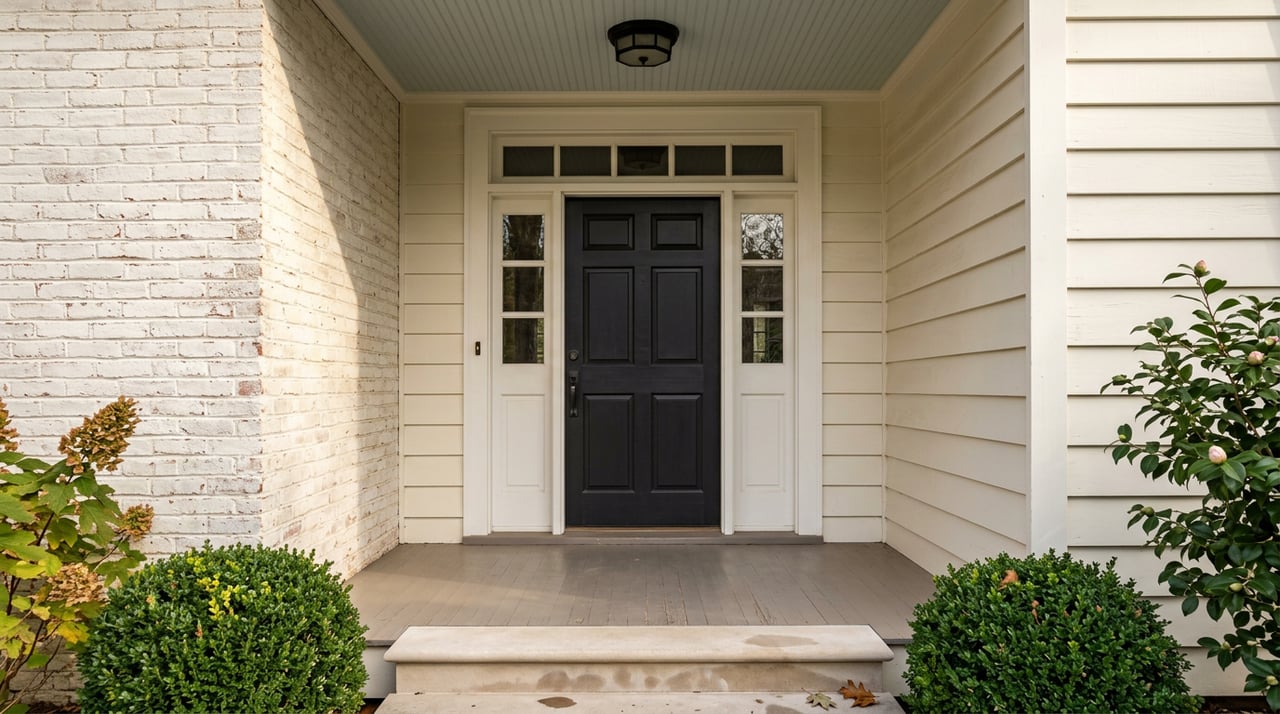
The first is paint. In 2014, the Georgia Attorney General responded to the Roswell City Attorney with a formal opinion, and the conclusion was direct: exterior paint alterations are expressly excluded from the definition of "material change in appearance" and, therefore, do not require a certificate of appropriateness in order to be carried out. A front-door refresh, shutter color change, or full exterior repaint is yours to make without a hearing. For a listing, that is often the highest-impact move you have.
The second is ordinary upkeep. Ordinary maintenance or repair of any exterior architectural feature that does not involve a material change in design, material or outer appearance is excluded from review. Replacing a few rotted porch balusters with identical profiles, patching mortar, or reroofing in the same material and color pattern typically falls here. Change the design, material, or appearance and you are back inside the process.
The distinction is worth thinking through before you call a contractor. "In-kind" is your friend. "Upgrade" is your calendar's enemy.
Redfin's data through February 2026 shows a Roswell median sale price of $645,000, up 4.9% year over year, on roughly 47 median days on the market citywide. But citywide numbers hide the story. Realtor.com's sub-market breakdown had the Roswell Historic District running about 30 median days on market this spring, compared with 23 in Martin's Landing, 37 in Horseshoe Bend, and 46 to 48 in Barrington and Holcombs Crossing. Sale-to-list ratios in Roswell have held around 98 to 99%.
Read that alongside the COA calendar and the seller's problem becomes clear. Buyers for well-prepared Historic District homes are still moving in roughly a month. If a Major COA pushes your list date from mid-September to late October, you are not just delaying a listing, you are moving your buyer conversation from the strongest weeks of the fall market into the pre-holiday slowdown. The cost of a review cycle is not the filing fee. It is the pricing power you had in the earlier window.
That is also why the exemptions matter so much. Paint, in-kind repair, staging, and interior work carry no review burden and can lift a home meaningfully in a market where the sale-to-list ratio is already tight.
For an -HOD home, the order of operations looks different than a standard suburban listing prep.
Do I need a COA to change my exterior paint color before listing? No. Under Georgia law and Roswell's ordinance, exterior paint color is outside the Commission's authority.
Can I remove a large tree in the front yard to open up the listing photos? Not without review. Tree removal and land disturbance inside the -HOD are captured by the ordinance and require a Certificate of Appropriateness before any permit is issued.
What happens if I already replaced the windows without a COA? Work completed without approval can lead to fines, permit delays, and, in some cases, reversal of unapproved alterations. Disclose it, and expect the buyer's due diligence period to surface it. It is better to talk through remediation options before the home is on the market than during a repair negotiation.
Is a Minor COA guaranteed if my project seems small? No. The only basis for denial of a Minor Certificate of Appropriateness will be that the application does not meet all the applicable requirements of the UDC, or is incompatible with the originally approved Certificate of Appropriateness. Clean documentation and in-kind specifications carry the day.
Selling inside the Historic Overlay District rewards sellers who plan around the calendar instead of against it. If you are thinking about a fall or winter listing on a home inside the -HOD, the conversation to have now is which of your pre-list ideas are exempt, which are Minor, and which will need a seat at a 6 p.m. Wednesday meeting. Courtney Lott Real Estate works through that map with sellers before the first contractor quote is signed. Schedule your free home consultation and let's build a listing plan that lines up with the review calendar, not around it.
Stay up to date on the latest real estate trends.

Whether you’re buying or selling in Atlanta, Courtney offers the expertise, integrity, and insight to guide you with confidence and care. Partner with her today!